
Year after year, Guatemala's macroeconomic situation remains stable. It is undeniable that challenges related to justice, infrastructure, health, education, and personal finances continue. However, both official figures and the actions of international institutions and credit rating agencies, which have improved the country's rating in 2025, show that Guatemala is viewed favorably from abroad. Although threats persist and the situation could change if reforms to laws such as the Money Laundering Act are not implemented.
Here are some of the most relevant indicators for the country's macroeconomy, and we analyze some factors to consider in 2026.
Gross Domestic Product (GDP) Growth
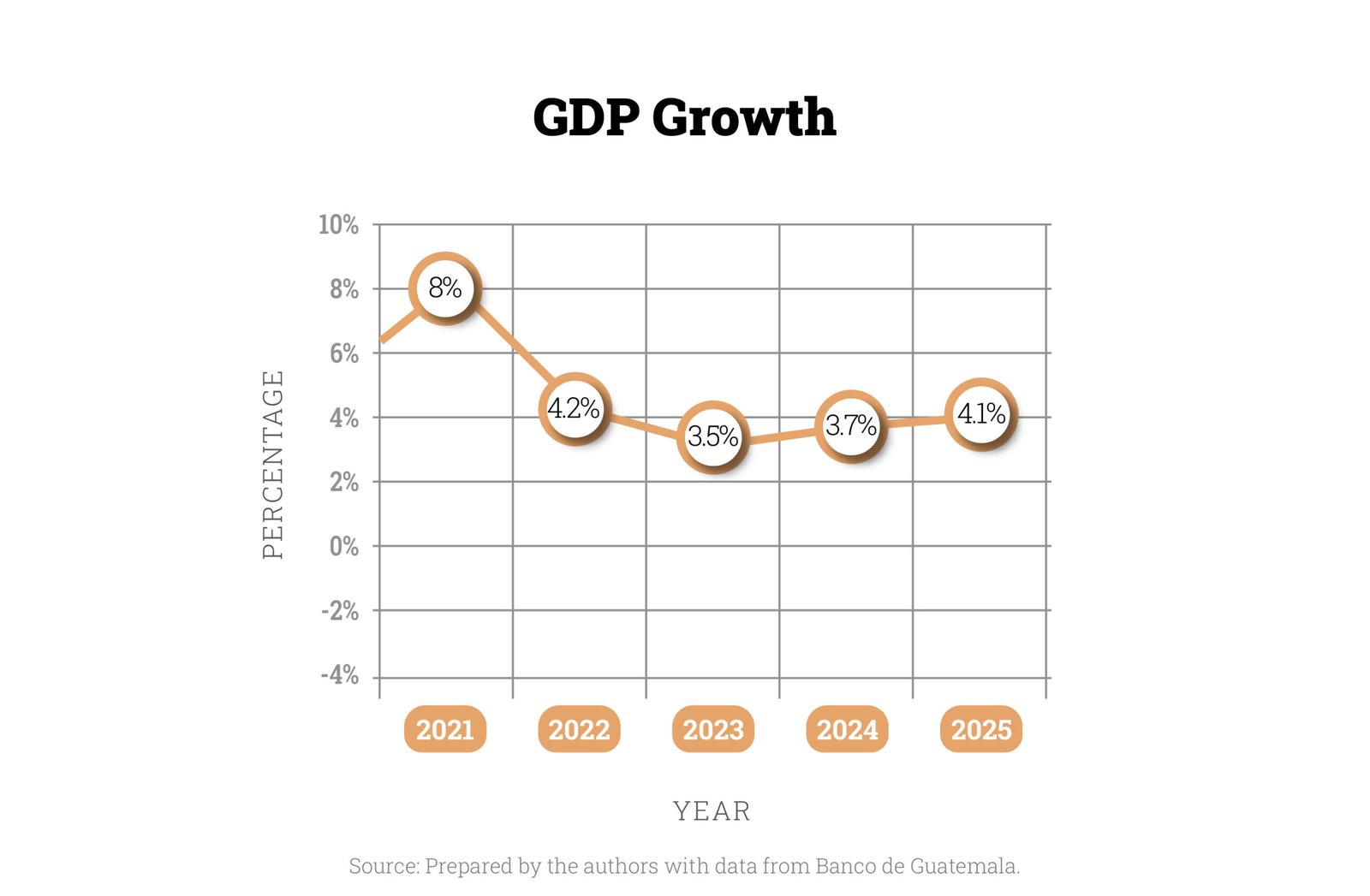
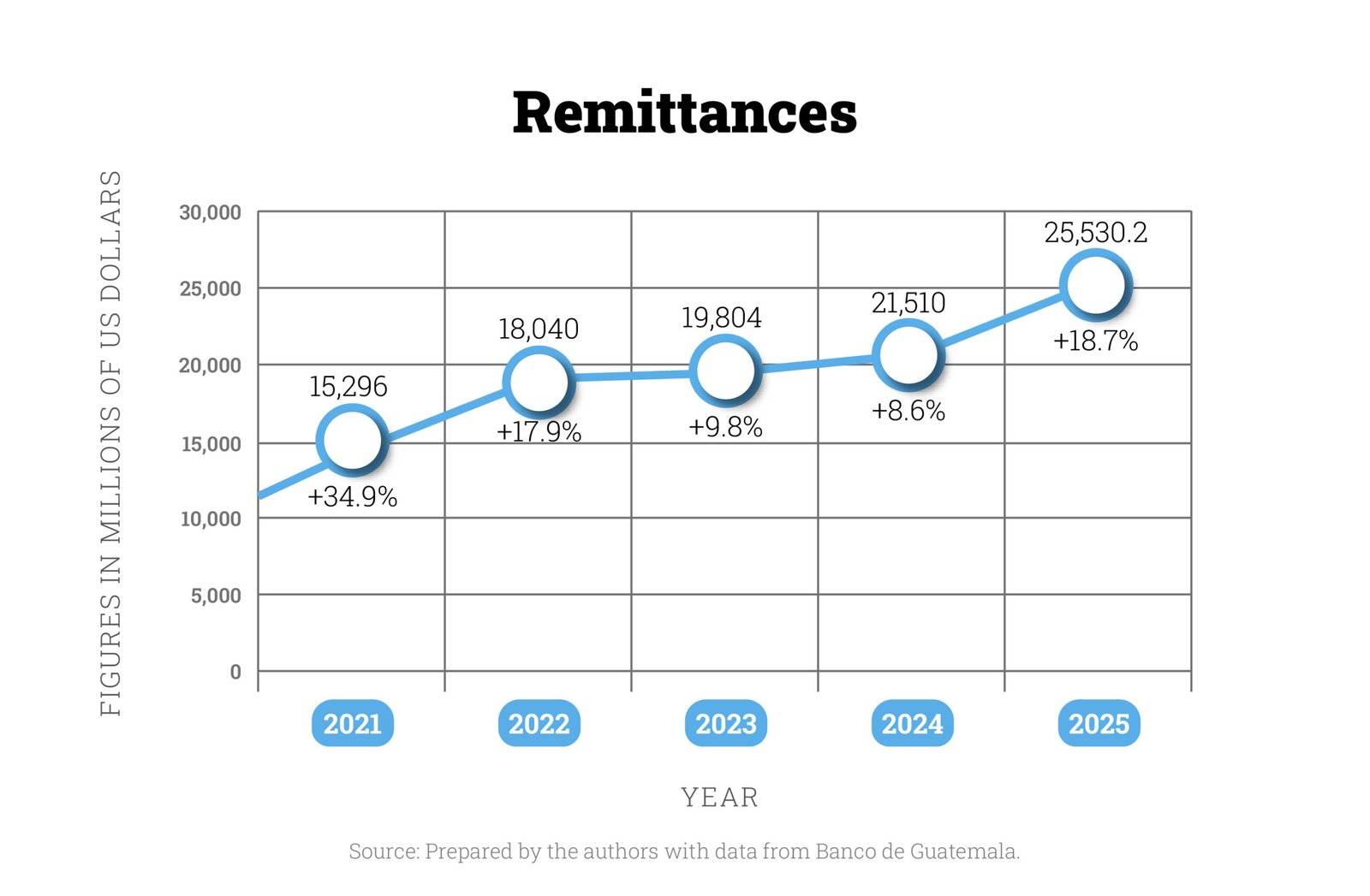
Guatemala closed 2025 with economic growth of 4.1%. Private consumption, investments and exports played an important role in these figures, but if there is one factor that seems to have exceeded expectations, it was remittances. They grew by 18.7% in 2025 compared to the previous year.
These figures appear to have been influenced by actions taken by the U.S. government, such as threats of mass deportations and the tax on remittances that came into effect in January 2026. Despite this, in January of 2026, remittances continue to show growth of 7.5% compared to January 2025.
Inflation
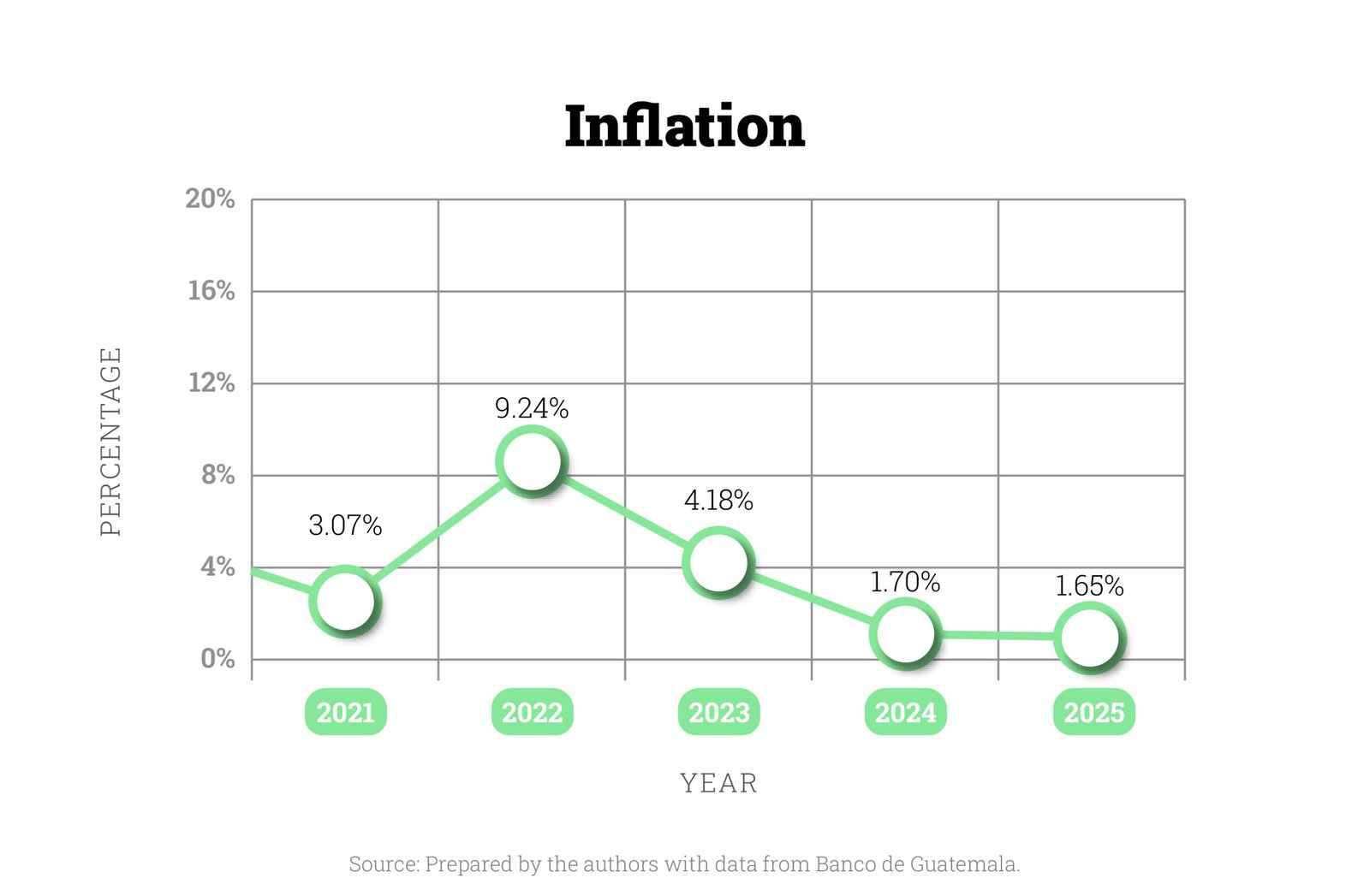
Inflation closed 2025 at 1.65%, similar to the figure recorded in 2024. It is important to remember that starting January 2024, the National Statistics Institute (INE) has been using a new methodology to calculate the Consumer Price Index (CPI). This has been questioned by some experts, especially because there is a perception among the population that the cost of living has increased more than the numbers suggest.
Unemployment Rate
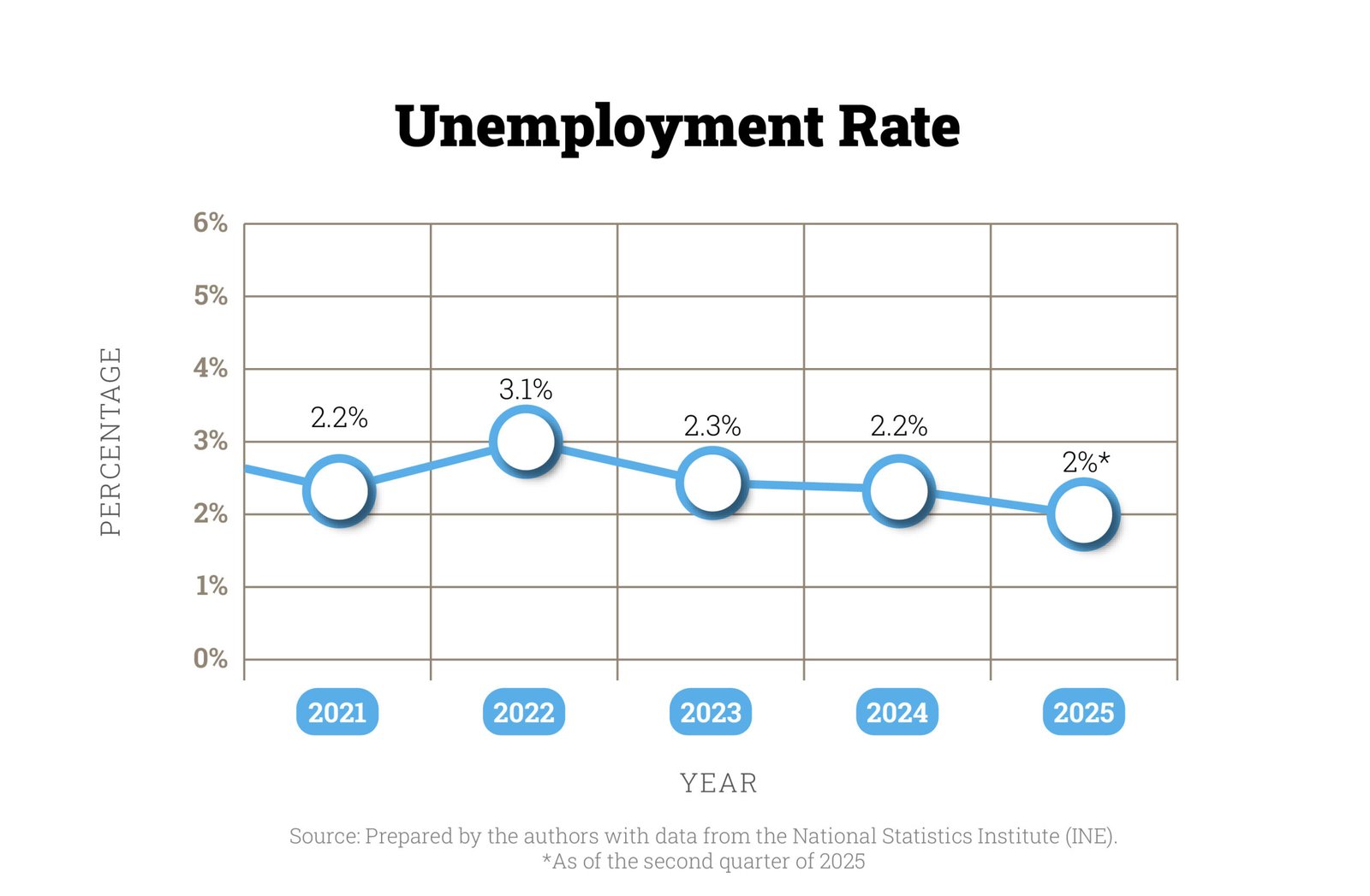
The unemployment rate in Guatemala remains low, with only 2% of the economically active population unemployed. It is important to note that this year, 5.3 million economically active people worked informally, according to the National Continuous Employment and Income Survey (ENEIC) conducted by the INE. This is equivalent to 66% of the economically active population, who don’t have formal jobs.
Public Debt
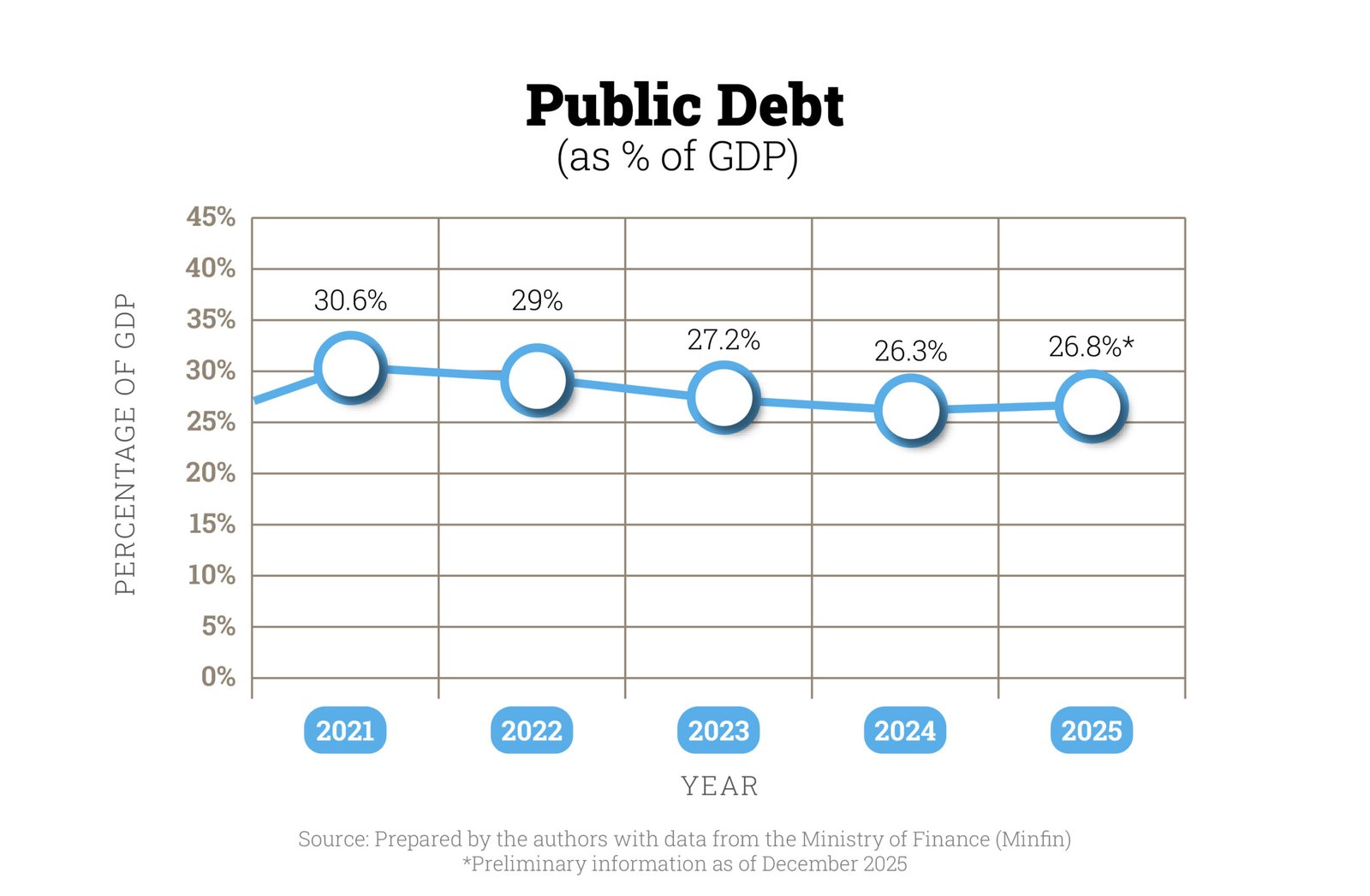
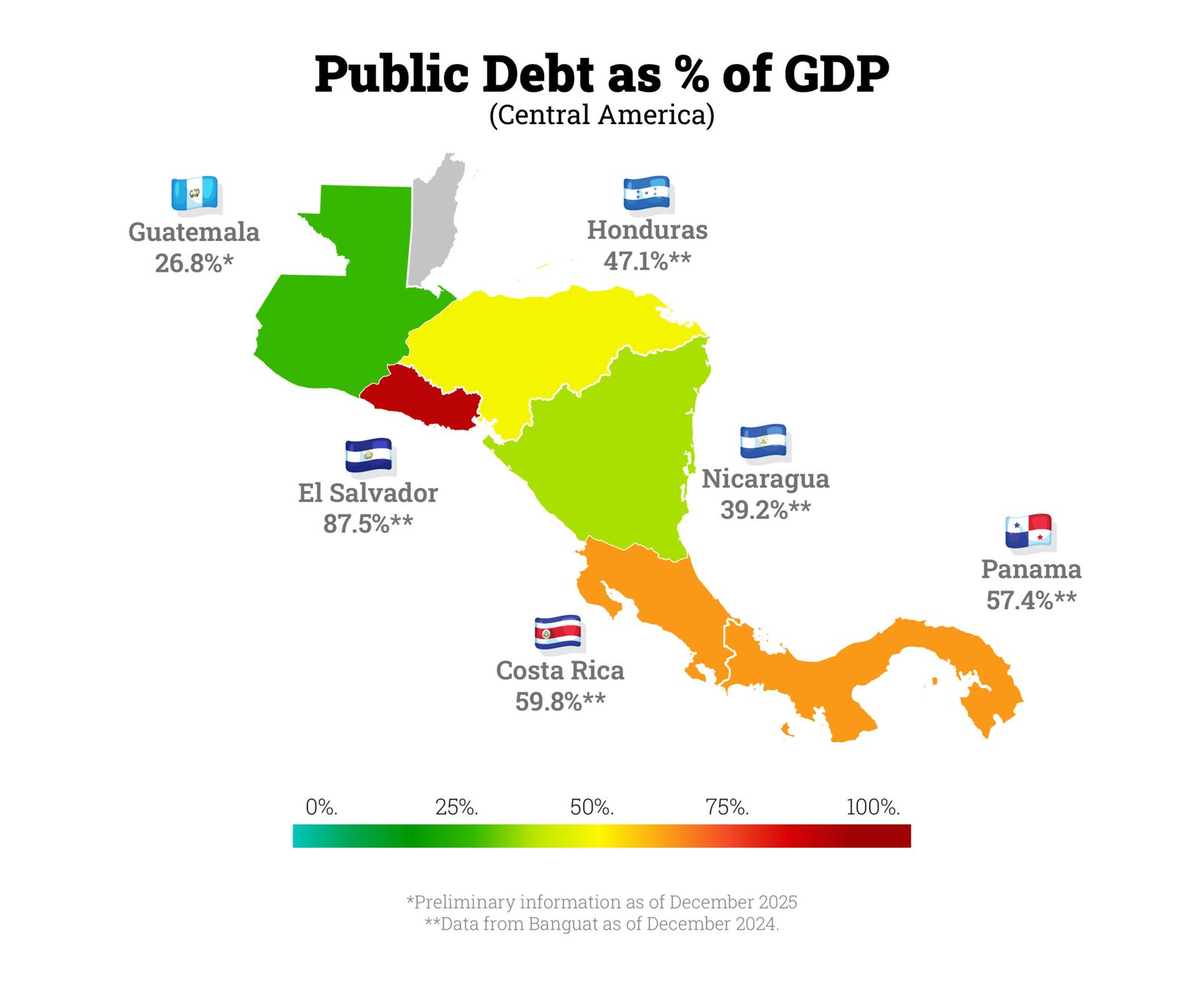
Unlike other countries in the region, Guatemala's debt continues to pose no major risk to the country's stability, as there is sufficient liquidity to meet its commitments. International institutions recommend not exceeding 40% in the debt-to-GDP ratio and 250% in the debt-to-tax revenue ratio.
In the first case, Guatemala has sufficient leeway, as it stands at 26.8%. Even institutions such as the International Monetary Fund (IMF) have stated that the country still has room to borrow, provided that these funds are used for investment.
In the second case, there was a significant decrease between 2021 and 2024, with that ratio falling from 262.3% to 223.9%, respectively. This is because over the last five years, tax revenue has grown by more than 85%, from Q60.2 billion (US$7.86 billion) in 2020 to around Q112 billion (US$14.6 billion) in 2025.
Tax Burden as a Percentage of GDP
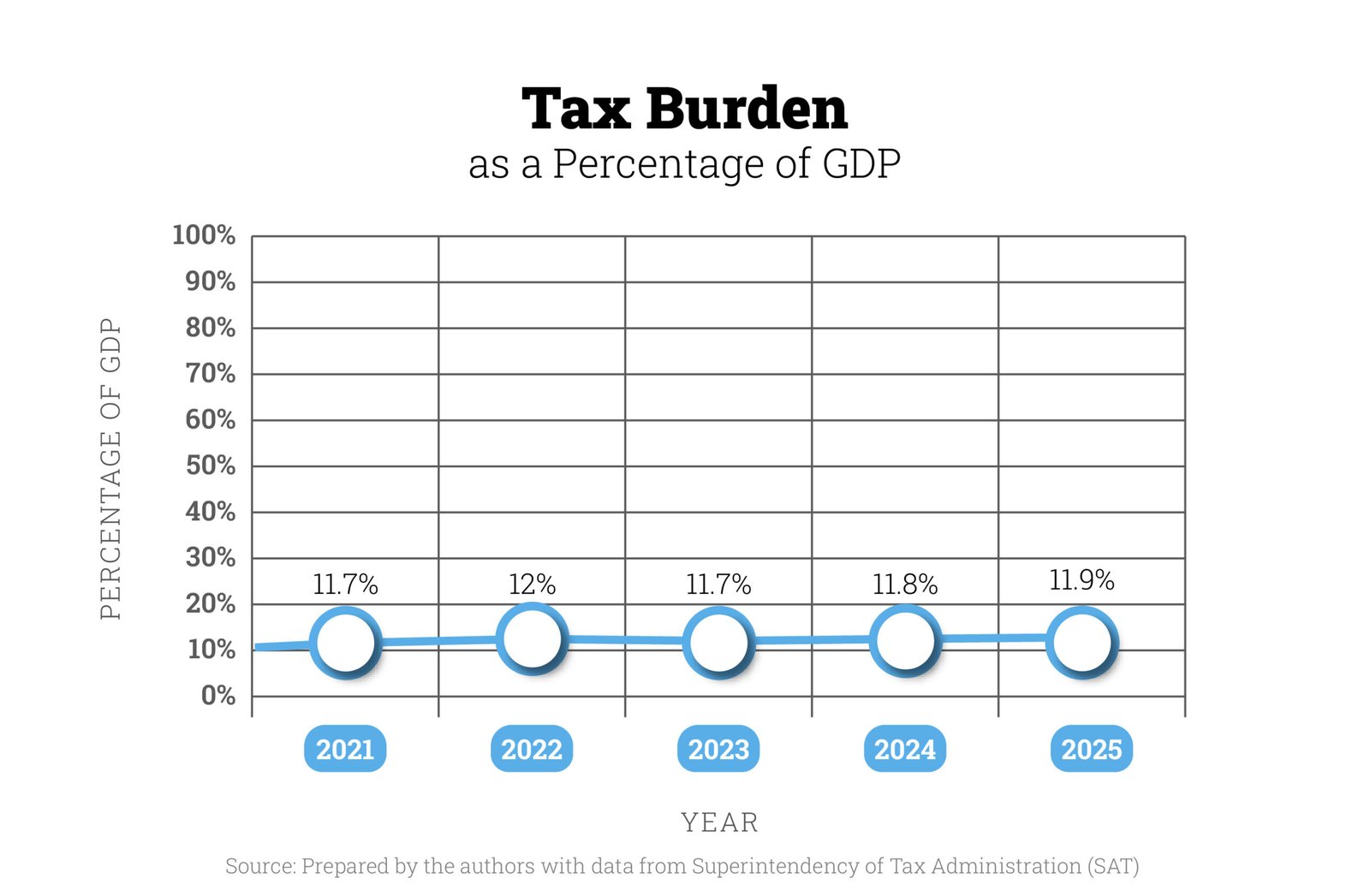
Although it has improved in recent years, Guatemala's tax burden remains low and is far from the 15% or 20% recommended by some international organizations for developing countries such as Guatemala.
This lack of resources limits the state's ability to invest in issues of vital importance such as infrastructure, education and health, and affects the ratings given by rating agencies.
Exchange Rate
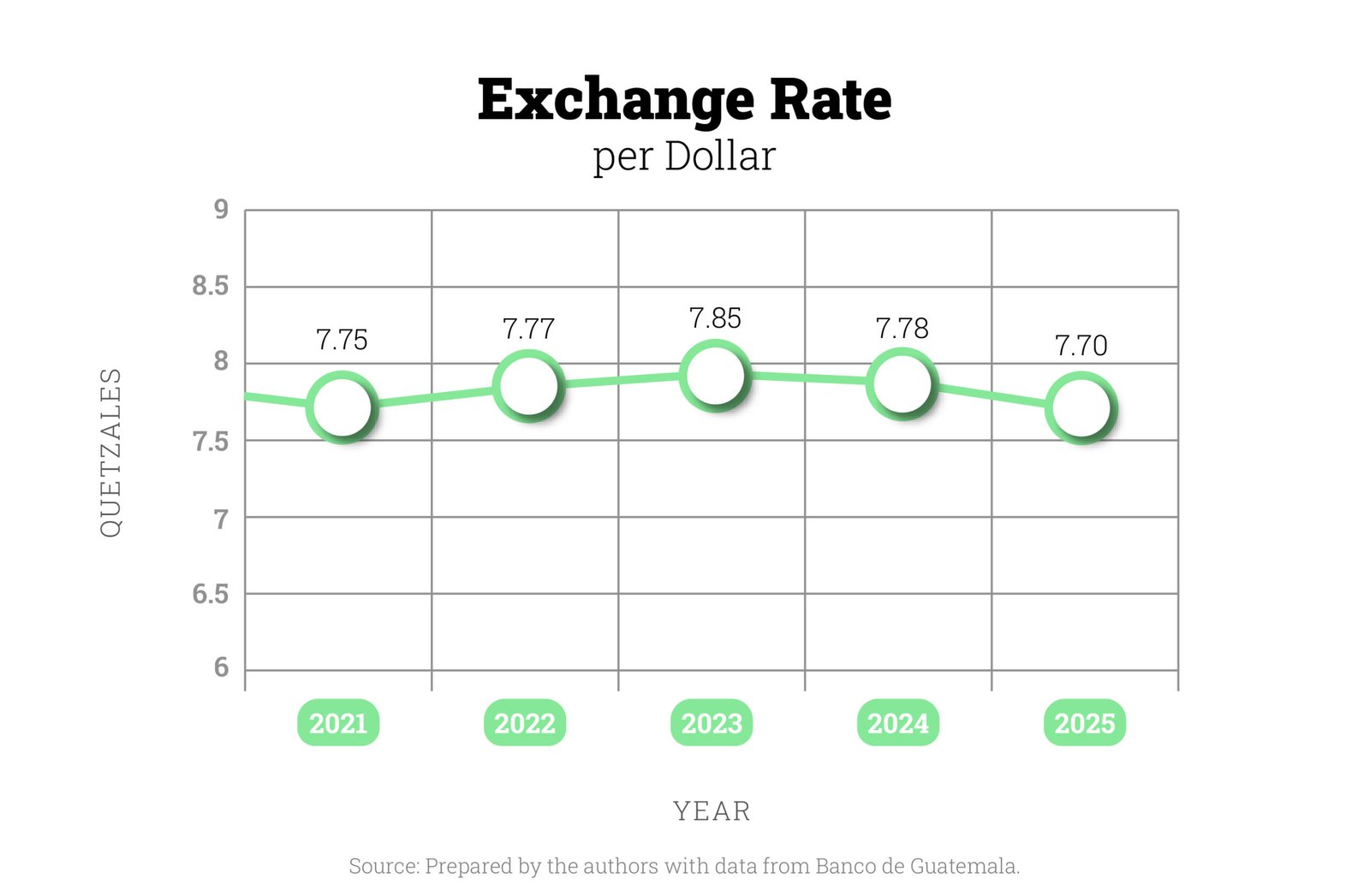
Since 2023, when it appreciated very slightly, the Quetzal has depreciated very slightly, but within the stability that has accompanied it in recent years. This situation is influenced by the Banguat participation rule, which was adjusted in December 2025. This is a mechanism that is activated when the exchange rate fluctuates beyond established parameters. The central bank then intervenes by buying or selling foreign currency to maintain the stability of the currency.
Trade balance
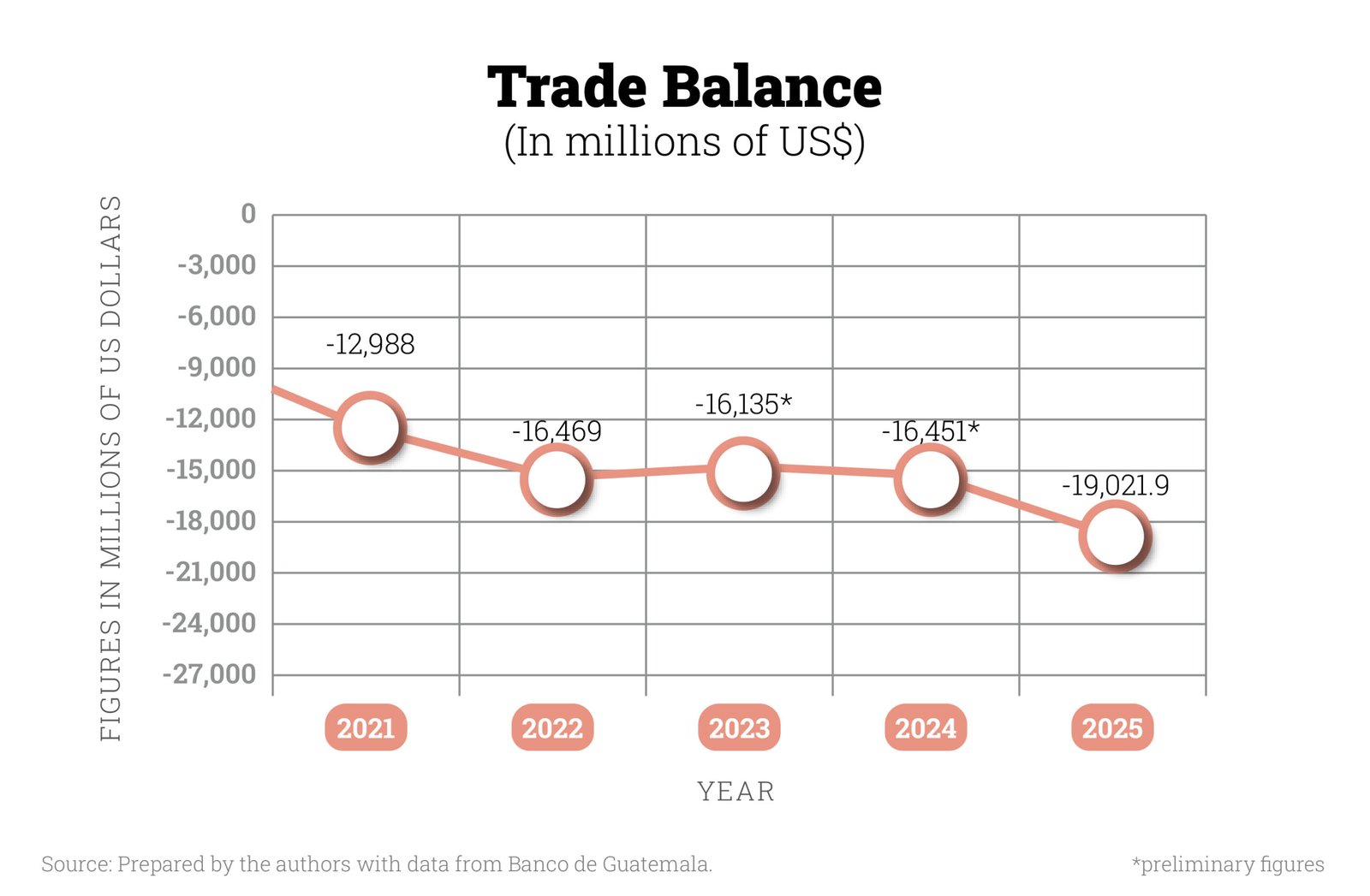
During 2025, Guatemala's exports and imports increased by 7.1% and 6.5%, respectively. As has been the norm, Guatemala's trade balance remains negative, as imports, which reached US$34.6 billion, far exceed exports, which amount to US$15.58 billion. It is important to note that this year's trade gap has been wider than in recent years.
By product and country, we sell mostly clothing, coffee, bananas, and sugar to Central America, the United States, and the Eurozone. Conversely, we buy mostly non-durable consumer goods and capital goods for industry, telecommunications, and construction from the United States, the People's Republic of China, and Central America.
Monetary Reserves
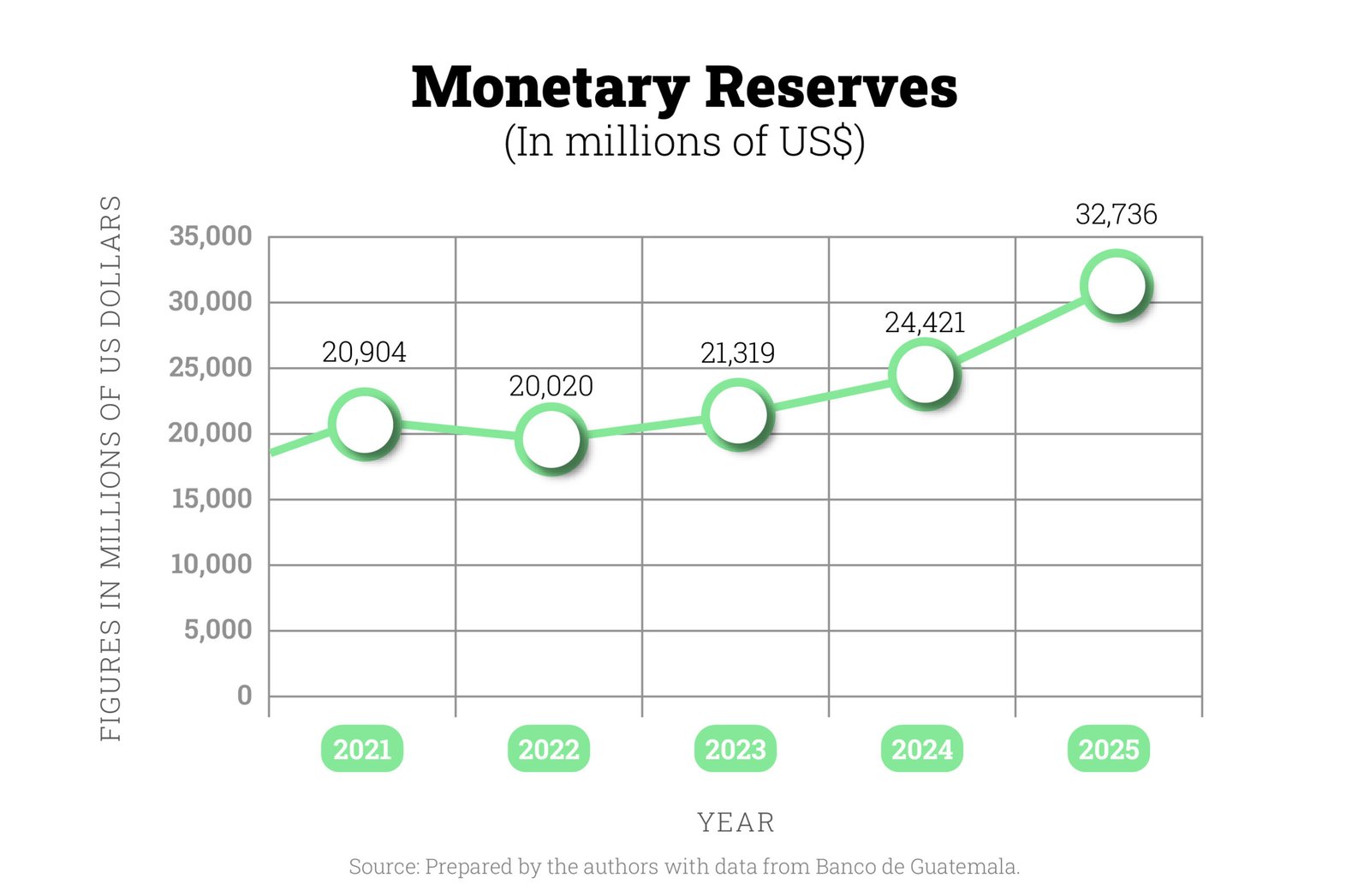
As of December 2025, Guatemala's monetary reserves exceeded US$32.7 billion, representing an increase of more than US$8 billion (+34%) over the same period in 2024. According to Banguat's President Álvaro González Ricci, this is a consequence of the country receiving more dollars than the foreign exchange market requires. These dollars come mainly from remittances, exports, and a Eurobond that the country placed in 2025. This strengthens the country's position to meet its short-term obligations if necessary.
Foreign Direct Investment (FDI)
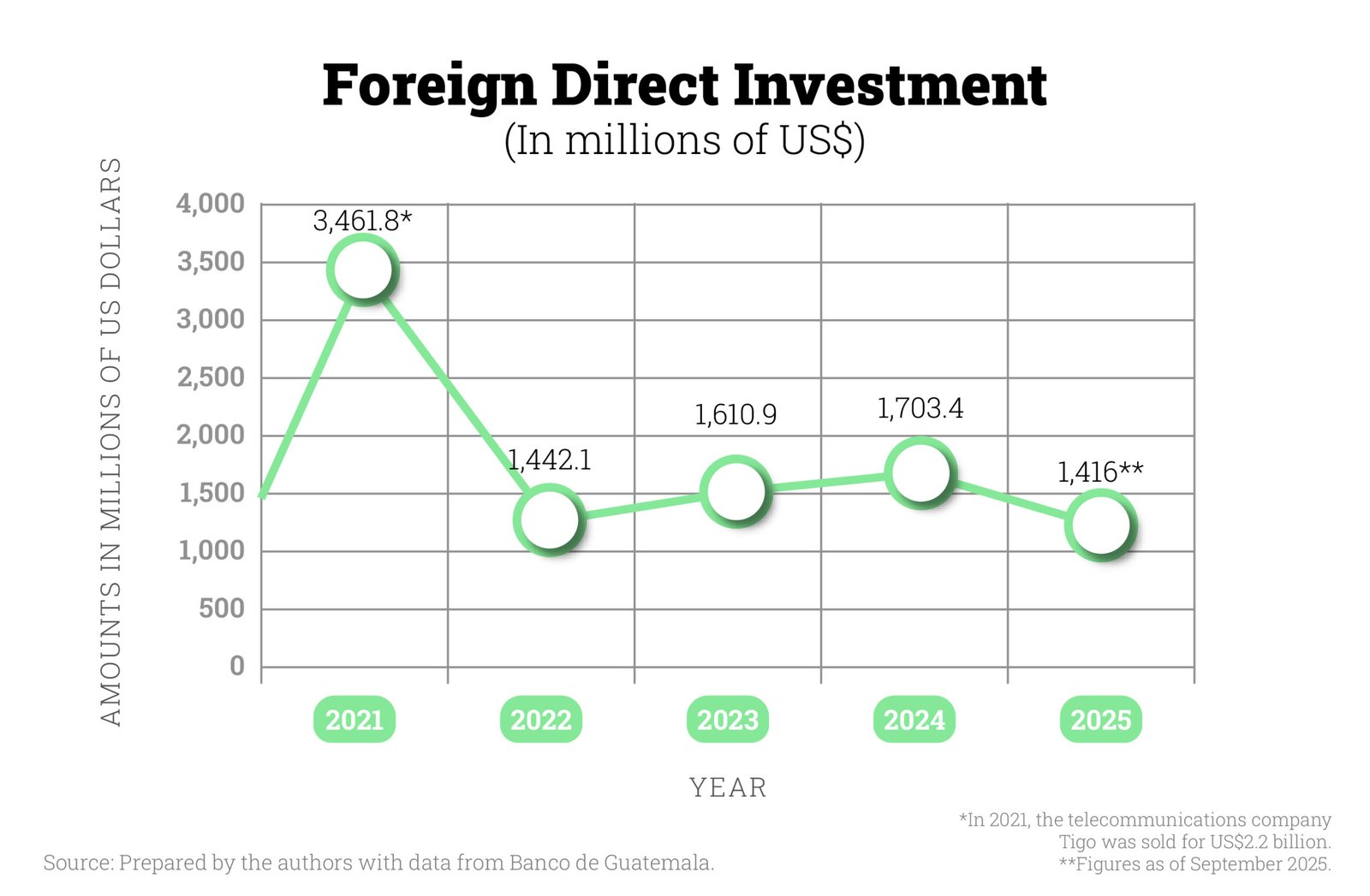
Foreign investment figures for December have not yet been confirmed, but based on the figures recorded through September and Banguat's year-end forecast (US$1.875 billion), everything seems to indicate that there will be slight growth compared to the previous year.
According to data published through September, the bloc formed by Central America and the Dominican Republic leads investments with US$511.2 million. They are followed by the United States (US$279.2 million), Mexico (US$182.4 million), the Netherlands (US$125.2 million), and Luxembourg (US$112.1 million).
In terms of the sectors to which most funds were allocated, the main items remain the same as in 2024. Financial and insurance activities (US$639.1 million) continue to lead investments, followed by manufacturing (US$222.5 million), vehicle trade and repair (US$206.5 million), and information and communications (US$202.7 million).
Conclusions
- Macroeconomic stability continues to be one of the country's strengths, something that is recognized by international rating agencies. This is one of the fundamental points for achieving investment grade status.
- It is important to pay attention to the effects that the US tariffs that remain in force and issues such as the tax on remittances will have on the national economy.
- Informality, low tax rates, and insufficient investment in critical infrastructure continue to hinder efforts to address the high rates of poverty and inequality that exist in the country.
- It remains to be seen what impact the changes in leadership throughout 2026 in the Public Prosecutor's Office, the Constitutional Court, the Supreme Electoral Tribunal, the Bank of Guatemala, the Superintendency of Banks, and the Comptroller General's Office will have on the country's governance.
- It is essential that the country approve and implement a new Law against Money Laundering and Terrorist Financing before the visit of the Financial Action Task Force (FATF) in early 2027. If no progress is made in this area, the country could be placed on a "gray list" that includes nations with deficiencies in their measures to combat these threats.


Published on March 9, 2026.