

Having a valuable business is not the same as having a business that’s attractive to buyers. It’s no coincidence that between 70% and 80% of small and medium-sized businesses that are put up for sale fail to find a buyer[1].
This can happen because the business’s value is concentrated on aspects that aren’t easily transferable such as the owner’s expertise, business relationships, the trust of certain customers, or processes that were never documented. But it can also be due to unresolved legal, financial, or corporate issues that can weigh heavily on a buyer’s evaluation of the deal.
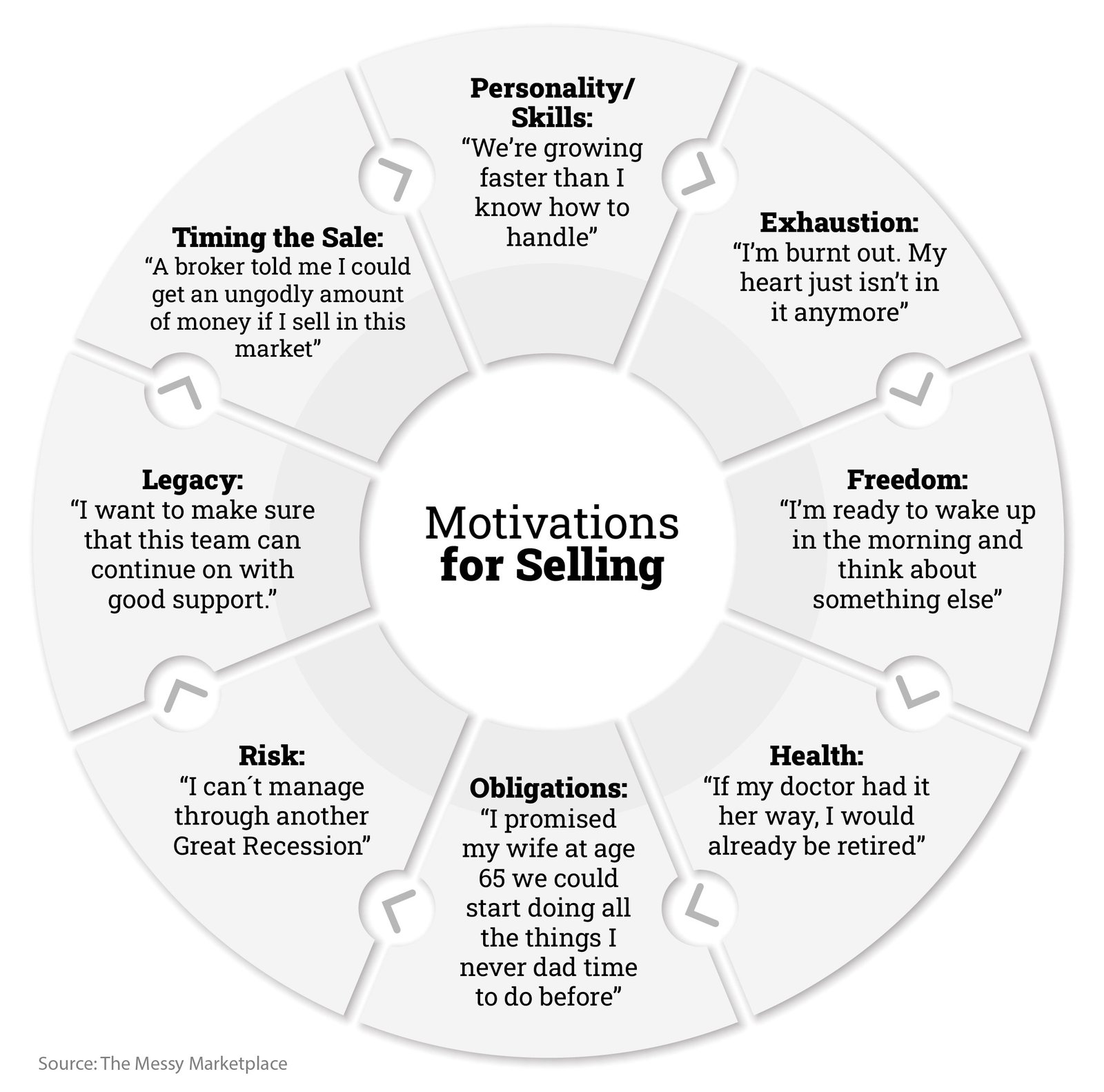
Financial expert Brent Beshore explains in his book The Messy Marketplace[2] that there are several reasons to sell a business, but that this decision is rarely purely rational, because behind every business lies a personal or family story. Recognizing this emotional baggage allows one to approach the process with greater objectivity. Some of the reasons include:
What Could Make the Sale Difficult?
As with any sale plan, the process will go through different stages, ranging from internal preparation, identifying and approaching potential buyers, to due diligence, negotiation, and closing the deal.
An initial decision will be to define what you want to achieve—to establish a benchmark for the negotiation—and to assess the factors that could jeopardize the transaction. These may be related to the business’s structure, its operations, financial and legal aspects, and, in some cases, personal matters involving someone connected to the company. The key is to identify them before the buyer does.
Another issue that must be determined is whether the sale will be total or partial. In the latter case, in addition to the percentage of ownership, it will be necessary to define aspects such as the level of involvement the partners will retain, timelines, return expectations, guarantees, and the terms that will govern the relationship with the new investor.
It is also important to identify the right buyer. A strategic buyer, for example, may value the business differently than a financial investor who is only looking to generate a quick financial return.
Preparing for Buyer’s Scrutiny
A buyer will ask questions and seek to verify that the information provided matches the reality of the business. Therefore, getting financials in order, resolving pending corporate issues, and addressing known legal contingencies can make a significant difference. Doing so before an offer is on the table allows the partners to enter negotiations with greater control over the information and with an understanding of the risks the buyer will encounter during due diligence.
It’s also important to understand that there is no universal “fair value” for a business, as this will be determined by the amount the buyer is willing to pay. What a well-prepared company can do is back up its expectations with reliable financial information, contracts, corporate documentation, and a sound legal standing. This does not guarantee that the buyer will accept the price the seller expects, but it allows for a conversation based on facts rather than perceptions.
Another aspect to keep in mind is that a transaction may not close, even after months of negotiation and hard work. A change in market conditions, a difference in the parties’ expectations, a finding during due diligence, or difficulty agreeing on the final terms can cause the buyer to withdraw. Having a clear strategy and realistic expectations from the outset allows you to anticipate these scenarios and make decisions more quickly.
The company may be profitable for its owner and, at the same time, not yet ready for a sale. Preparing it for sale involves ensuring that its value can be understood and appreciated by the future owner. That is why legal and financial advisors play such a crucial role—their work goes beyond simply preparing documents or negotiating terms. The right advice will help you identify risks, structure the transaction, evaluate alternatives, negotiate with potential buyers, and see the deal through to closing. It will also allow partners to keep their focus on the business while the sale process moves forward.
Selling a business, then, is not merely a matter of finding someone willing to pay a certain price. It involves designing a transaction that meets the objectives of those who built the business, ensures its value is recognized, and minimizes the risks that could prevent the transaction from being successfully completed.
If you would like more information or are considering selling your business, feel free to contact us.


[1] Exit Planning Institute, State of Owner Readiness, cited in Forbes, “Why 80% of Owners Can’t Sell a Business When They Want To,” April 2025. https://www.forbes.com/sites/liendepau/2025/04/09/why-80-of-owners-cant-sell-a-business-when-they-want-to/
[2] Beshore, Brent. 2018. The Messy Marketplace: Selling Your Business in a World of Imperfect Buyers. Boring Books.
Published on September 4, 2026.