

We often hear the phrase "where there's a will, there's a way." Some even say that if you want something badly enough, it will come true. In a world that is so complex and often hopeless, it never hurts to have this kind of positive thinking to try to achieve great things. But objectively, reality often shows us that more elements are needed for the goals we set ourselves to become reality. Often, we even believe that we have done everything right, and yet we still don’t reach the goal.

And that's how life is, a mixture of successes and failures. The important thing is that we learn from both so that we can grow. As the year comes to an end, I want to take a moment to share the great lessons that 2025 has taught me at the Firm, as I know they will lead to building more and better things in 2026.
In my experience, when setting goals, I always keep in mind the Triangle of Action, which brings together the concepts of Wanting, Knowing, and Competence.
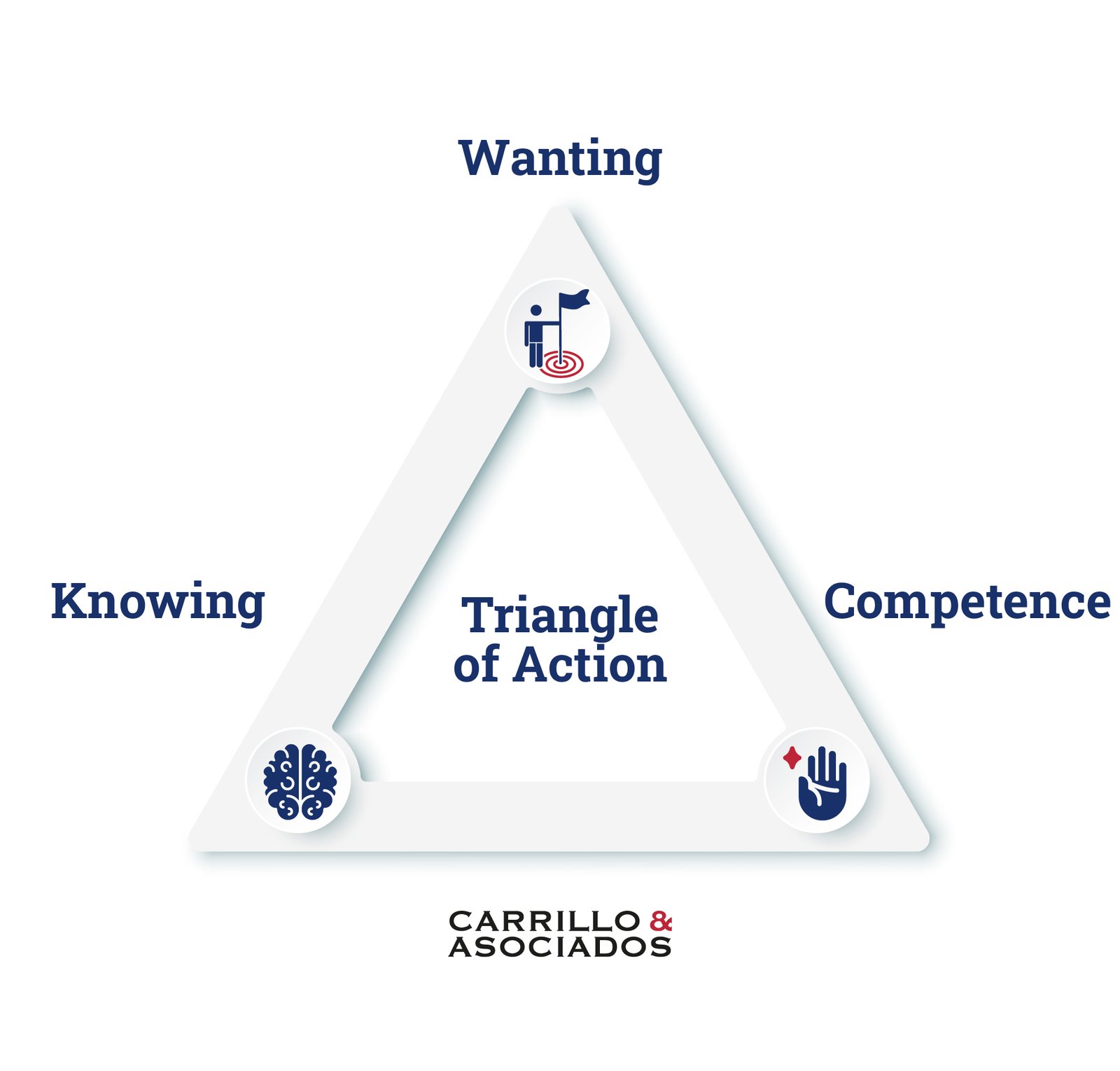
Wanting is the will that drives us to try to achieve something. It is the internal motivation to get started. Knowing refers to the knowledge, technical skills, or procedures to make things happen. Finally, Competence refers to our actual capacity for action. When we talk about business, this means the resources, the time to execute, the tools we have, or the freedom we have to do so. To be successful and make good decisions, we must fulfill the three premises: wanting to do something, knowing how to do it, and being able to do it.
With this in mind, here are some reflections that 2025 has left me.
1. Make Decisions and Accept the Outcome
There are roles that require decision-making, and as one grows within the organization, responsibilities increase. But the reality is that not everyone is willing or prepared to take them on. A good leader recognizes the work when things go well but is also the first to take responsibility when things go wrong.
Making decisions is not something to be taken lightly. Before jumping in, it is important to ask yourself questions such as: Do I have the knowledge, authority, and power to make this decision? What does it entail? The answers will help you figure out the best way to decide and live with the consequences of our choices. It is important to be clear that to avoid making a decision is a decision in itself, or when I allow someone else to make a decision for me, the decision is simply to hand it over to someone else, but even so, I still bear the responsibility.
2. An Expert Knows Their Weaknesses
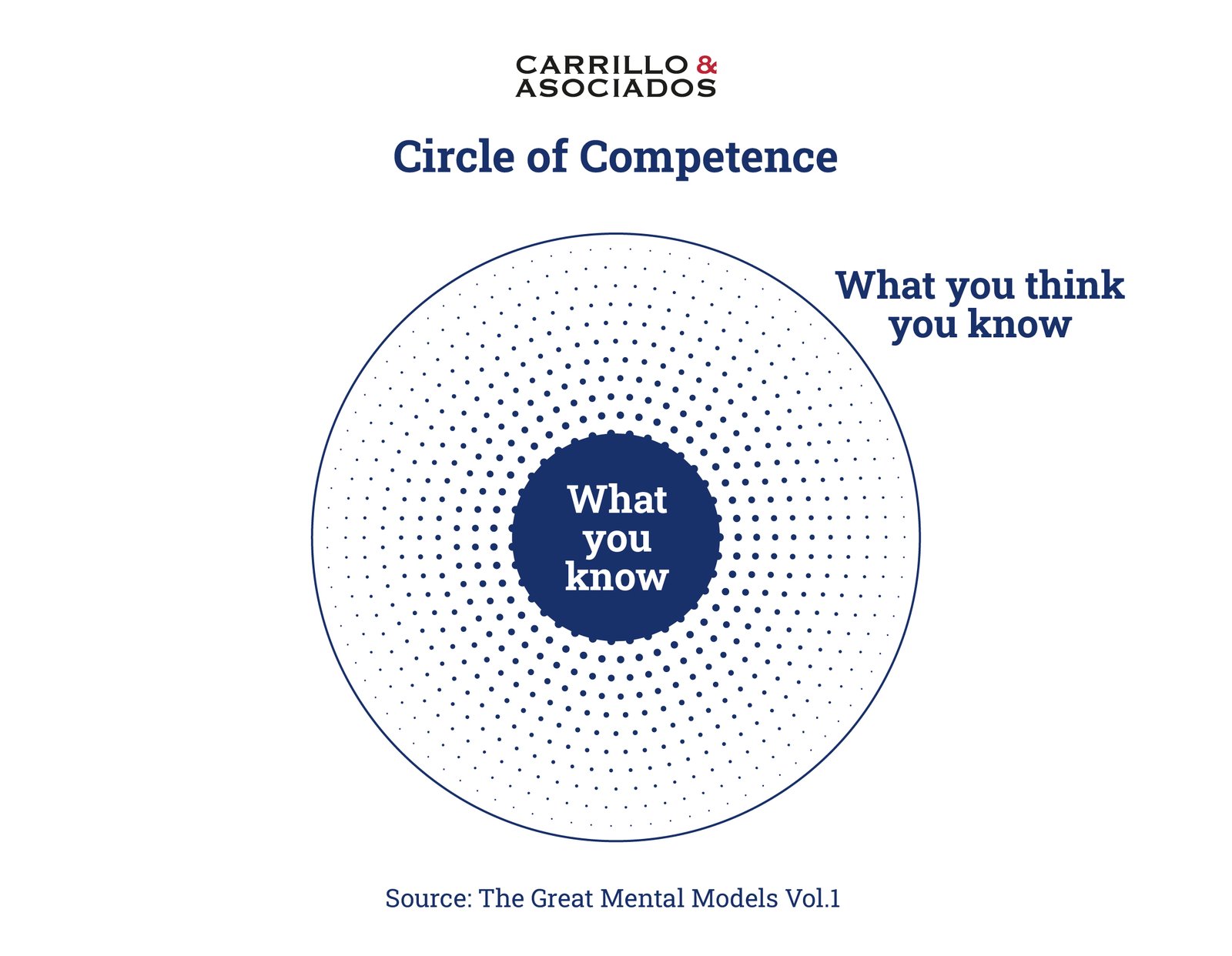
When we reflect before deciding, we may conclude that we do not always have all the knowledge we need to make it. And that self-awareness will allow us to seek out the true expert to guide us. And who is an expert? In my experience, and based on the well-known Circle of Competence, a true expert is someone who, beyond their ability and knowledge on a subject, has the humility and ability to identify their blind spots; they are clear about what they do not know.
From a business perspective, when we have a clear picture of the situation and the experts who can guide us, it will be easier to set the desired goal and the scenarios to avoid. Experts are our allies. It is essential to surround ourselves with the best people so that we can make the right decisions and cover our own blind spots, putting aside the ego of believing that we know everything and continually surrounding ourselves with people who are more capable than us.
3. Everyone in the Organization Has Wisdom to Share
Every mind is a world unto itself, and it is important to hear all the voices in an organization to discover different sensibilities, points of view, and even life experiences. We tend to relate professional worth and respect to the amount of training or position within a company, but the reality is that everyone has interesting ideas to share. We just need to give them space to do so.
In my experience, when pleasant environments are created, people open up. And from those conversations arise relationships of trust that strengthen teams and generate great value. The reality is that projects are more successful when many voices are heard, even and especially those that go against the grain, and when people work as a team, listening with respect.
This year, we were able to hold quarterly meetings with all members of the Firm. These were opportunities to share progress toward goals, but the real value came from listening to the team, learning their perceptions, and identifying what we did well, what we did poorly, and what we learned. I recommend this exercise to any decision maker; I assure you that it will open your eyes to realities you have not seen before.
4. Thought Processes Are Important
Argentine soccer coach Marcelo Bielsa once said, "Don't worry if a process that achieved less than it deserved is not rewarded. That shouldn't concern us: injustice is very common. But when something that is not good, that is random, is rewarded as good, that is very harmful to everyone. Because it teaches everyone who is watching that a shortcut will get you to your goal. And normally, a shortcut does not get you to your goal."
I would add that going through processes is always worthwhile, especially thought processes. The mere act of asking questions to arrive at a solution, forcing yourself to think and listen to others, is already a win. The goal is for that to culminate in a satisfactory result, but if that does not happen, at least we will have learned a great deal. We must therefore try to prepare a series of questions in advance and not answer them lightly, but rather reflect on them intentionally.
5. Trust And Control Complement Each Other
Control and trust may seem like opposites, but in my experience, they are complementary. Trust allows us to delegate and enable people to do, create, and innovate. But control is necessary because it is an act of responsibility. By this, I do not mean being leaders who micromanage, but rather being clear that even though we delegate, we remain ultimately responsible for the work and the decisions made.
Leaders can trust their teams to design and execute a project or case, but people make mistakes and sometimes things don't turn out as expected. A leader's control acts as a brake that will prevent the team from crashing, and at the same time, it acts as quality control. Their monitoring and guidance will prevent the worst-case scenarios, and this can only happen if they are present and paying attention to their team.
***
These are some of the lessons that 2025 has taught me. I hope to capitalize on this knowledge in the coming year and that every day we can build a better firm for our team, our clients, and Guatemala.
From Carrillo & Asociados, we wish you happy holidays and a prosperous 2026!
Published on December 8, 2025