Current

Corruption Perception Index 2022

Newsletter #146 / February 2023

Transparency International published the 28th annual edition of theCorruption Perceptions Index (CPI) 2022,which measures the perception of corruption in the public sector.

The CPI is the world's leading corruption ranking. The scores are calculated based on at least three data sources, provided by various prestigious institutions, such as the World Bank and the World Economic Forum, amongst others.

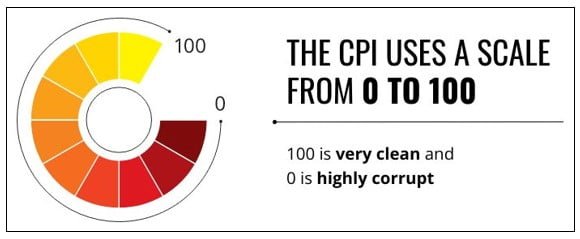
The CPI ranks 180 countries and territories on a scale of 0 to 100, where 0 means highly corrupt and 100 means very clean.

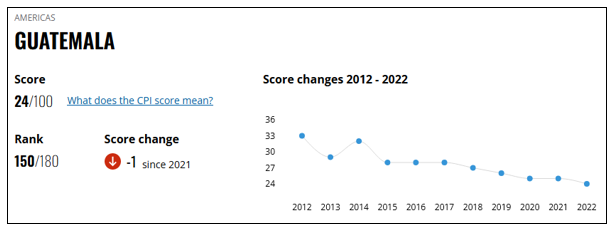
In the 2022 report, Guatemala obtained a score of 24 point (one less point than in 2021), and it was ranked #150 out of 180 countries.

The data sources specifically cover the following corruption scenarios:

  • Bribery.
  • Embezzlement of public funds.
  • Officials using their public office for personal profit without facing the consequences.
  • Capacity of governments to prevent corruption.
  • Excessive bureaucracy in the public sector.
  • Nepotism in the appointment of public officials.
  • Legislation to ensure transparency in declarations of personal finances and possible conflicts of interest in public office.
  • Legal protection for whistleblowers in cases of bribery and corruption.
  • Capture of the state by private interests.
  • Access to information on public matters of citizen interest and government activities.


Derived from this score, these are some of the actions the ICP recommends that Guatemala should implement to fight corruption:

  • Encourage an active participation of individuals and groups in civil society.
  • Promote ethical values, such as integrity, honesty, and transparency, in the public and private sectors, through the establishment and enforcement of codes of conduct.
  • Allow civil society to participate in governmental decisions and the promotion of accountability.
  • Establish appropriate public procurement and public financial management systems to increase institutional transparency.
  • Establish appropriate public procurement and public financial management systems to increase institutional transparency.


Adopt transparent systems for the selection, development, and retention of public servants, based on merit, equity, and aptitude.

SHARE
RELATED PUBLICATIONS

Tax-Free Inheritances: Key Points of Decree 6-2026

El 10 de febrero de 2026, el Congreso de la República de Guatemala aprobó el Decreto 6-2026, que deroga la Ley Sobre el Impuesto de Herencias, Legados y Donaciones (Decreto Número 431). A partir de su entrada en vigor , la transferencia de bienes por causa de muerte ya no estará sujeta al pago de este impuesto en Guatemala

Ver más

2026: A Key Year for Justice in Guatemala

2026 will be marked by several election processes that could change the course of the institutions responsible for ensuring justice and democracy in Guatemala. In the first half of the year, new magistrates will be elected to the Supreme Electoral Tribunal (TSE), the Constitutional Court (CC), and the Attorney General of the Republic, who will head the Public Prosecutor's Office (MP).

Ver más

Business Obligations to Start the Year in Guatemala

With the new year, companies begin a new period of opportunities to continue growing or consolidating their businesses. The first few months also bring with them certain tax, labor, and management obligations that must be complied with to avoid penalties in Guatemala. Below, we share some of these obligations so that you can ensure your organization is complying.

Ver más